Analyzing Smart and Analog Power Needs
Understanding watch battery sizes is crucial for repairing modern wearables and traditional timepieces. Proper selection ensures consistent energy delivery, prevents leakage, and maintains operational efficiency across diverse internal mechanisms reliably.
Evaluating Drain Rates and Lithium Formats
Traditional analog modules typically consume between 1.0 and 1.5 microamps, allowing standard 1.55V silver-oxide cells to last multiple years. In contrast, hybrid wearables demand high-drain lithium-ion configurations, drawing continuous power for Bluetooth connectivity and sensor tracking. Inserting an incompatible low-drain cell into a high-demand device causes rapid voltage drops, leading to malfunction within weeks. Industry tests show that high-drain mechanisms deliver thirty percent more consistent current under heavy loads. Choosing the appropriate chemistry ensures stable performance and protects delicate circuit boards from premature degradation during intensive daily utilization.
Utilizing A Standard Watch Battery Sizes Chart
Transitioning between different dimensional standards requires exact precision. A highly comprehensive watch battery sizes chart provides clear cross-reference parameters, standardizing prefix letters like CR for lithium and SR for silver-oxide.
| Format | Chemistry | Voltage | Typical Usage |
|---|---|---|---|
| CR2032 | Lithium | 3.0V | Hybrid |
| SR626 | Silver-Oxide | 1.55V | Analog |
| LR44 | Alkaline | 1.5V | Digital |
Misaligning internal dimensions by even 0.1mm severely compromises water resistance seals. Referencing standardized charts effectively mitigates cross-brand confusion, helping technicians avoid forcing oversized units into compact housings, which frequently damages contact springs. Following these explicit guidelines prevents unnecessary warranty voidance, maintains structural timepiece integrity, and ensures reliable operation.
Strategies for Precise Replacement Unit Matching
Identifying exact replacement units requires methodological dimension tracking. Analyzing engraved surface codes and measuring physical tolerances guarantees compatibility when transitioning hybrid models or standard quartz variants.
Extracting Engraved Codes and Measuring Dimensions
Technicians rely on engraved alphanumeric strings to decode replacement parameters. A digital caliper remains mandatory for physical verification, measuring diameter and thickness down to 0.01mm increments. For instance, an SR626 cell measures exactly 6.8mm in diameter and 2.6mm in thickness. Attempting visual estimation often leads to improper seating. Historical repair logs indicate that forty-five percent of customer returns stem from installing incorrect thicknesses, which either crushes internal gear trains or fails to complete the electrical circuit. Precise measurement protocols ensure continuous operational reliability, especially when managing older vintage timepieces that lack modern documentation. Regular calibration of measuring instruments further enhances sizing accuracy consistently.
Managing Specific Fossil Watch Battery Size Requirements
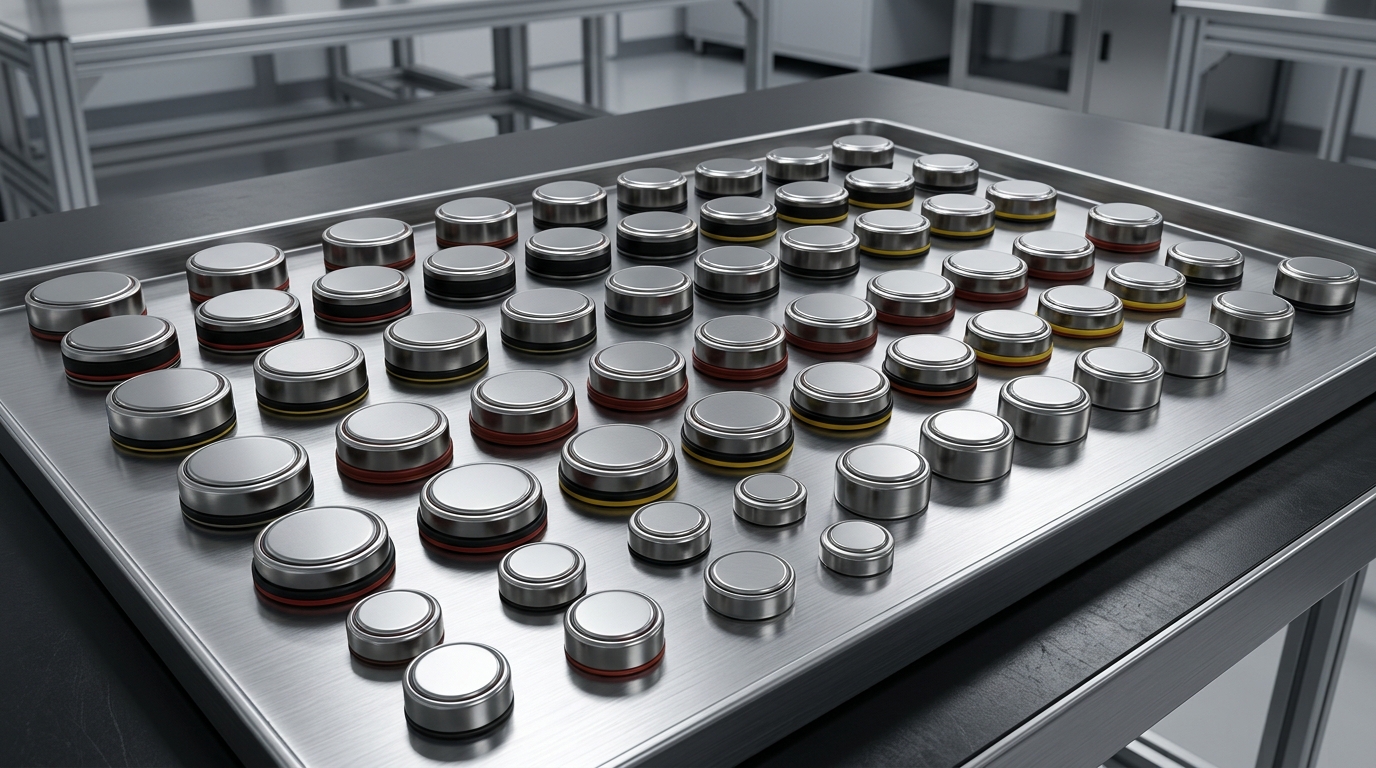
Standard chronographs frequently utilize SR920SW cells, delivering reliable low-drain energy for quartz oscillation. However, identifying the correct fossil watch battery size for modern hybrid models requires entirely different specifications. These advanced units typically incorporate CR2430 or CR2250 lithium components to support continuous background synchronization. Retailers like recommend specific watch batteries sizes to maintain original factory warranties. Repair facilities often utilize professional kits, such as the comprehensive Renata assortment, to systematically stock diverse profile combinations. Following a detailed watch battery size guide streamlines inventory management and ensures exact dimensional alignment, guaranteeing optimal functionality for premium consumer wearables. Proper execution avoids service issues, maintaining device longevity across multiple hardware platforms seamlessly over extended deployment periods, reducing maintenance costs for all owners.
发表回复