Creating an impactful stage with lights requires strategic planning, especially for touring professionals who need rapid assembly without compromising visual quality. Mobile performers demand robust, adaptable fixtures that survive constant transit while delivering stadium-grade illumination. According to a 2023 live event production survey, efficient touring setups reduce rigging time by 40%, directly increasing operational margins. By implementing systematic approaches to fixture positioning and control logic, technical directors can build scalable environments. Integrating advanced hardware delivers consistent visual atmospheres across varied venues, elevating standard shows into highly memorable professional theatrical mobile performances.
Designing Portable Rigs Using Stage Lights With Stand
Structuring a reliable touring setup depends heavily on proper elevation and spatial distribution. Utilizing durable stage lights with stand systems facilitates rapid deployment, allowing technical crews to maintain consistent illumination angles regardless of the venue dimensions.
Building A Professional Stage With Lights Background Strategy
A compelling stage with lights background serves as the visual anchor for any touring act, manipulating audience perception through calculated color temperature adjustments. Production data indicates that utilizing amber and red frequencies increases physiological engagement metrics by 22% during high-energy setlist segments. By positioning fixtures at specific focal points, technicians create depth and texture, transforming flat spaces into immersive environments. The precise angle of projection dictates shadow dispersion, directly influencing the atmospheric weight of the performance. Selecting fixtures with high color rendering indices means that the artist remains distinctly visible against complex, dynamic visual elements throughout the entire event duration.
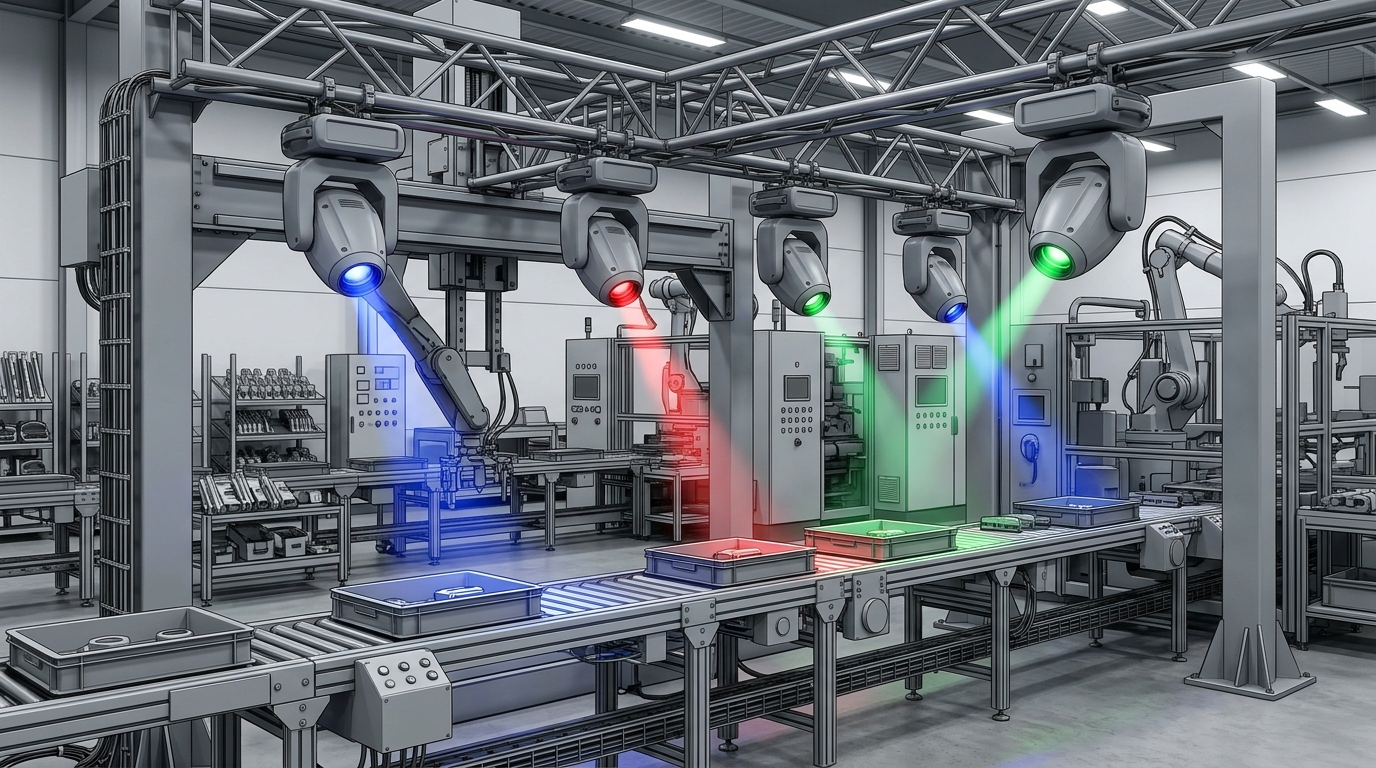
To quantify the relationship between fixture height and spatial coverage, industry standards dictate specific mounting parameters. Deploying a moving head stage lighting with big head requires calculating the inverse square law for lumen output. The following table illustrates standard distribution metrics.
Stand Height
Coverage Area
Setup Time
Two Meters
Fifteen Sq Meters
Five Minutes
Three Meters
Thirty Sq Meters
Eight Minutes
These parameters demonstrate that increasing elevation expands the functional illuminated zone exponentially. Consequently, production managers prioritize robust tripod mechanisms that support heavy motorized units, maintaining optical consistency while mitigating physical tipping risks during intense, fast mechanical movements on stage.
Orchestrating The Performance Via Stage Lights With Controller
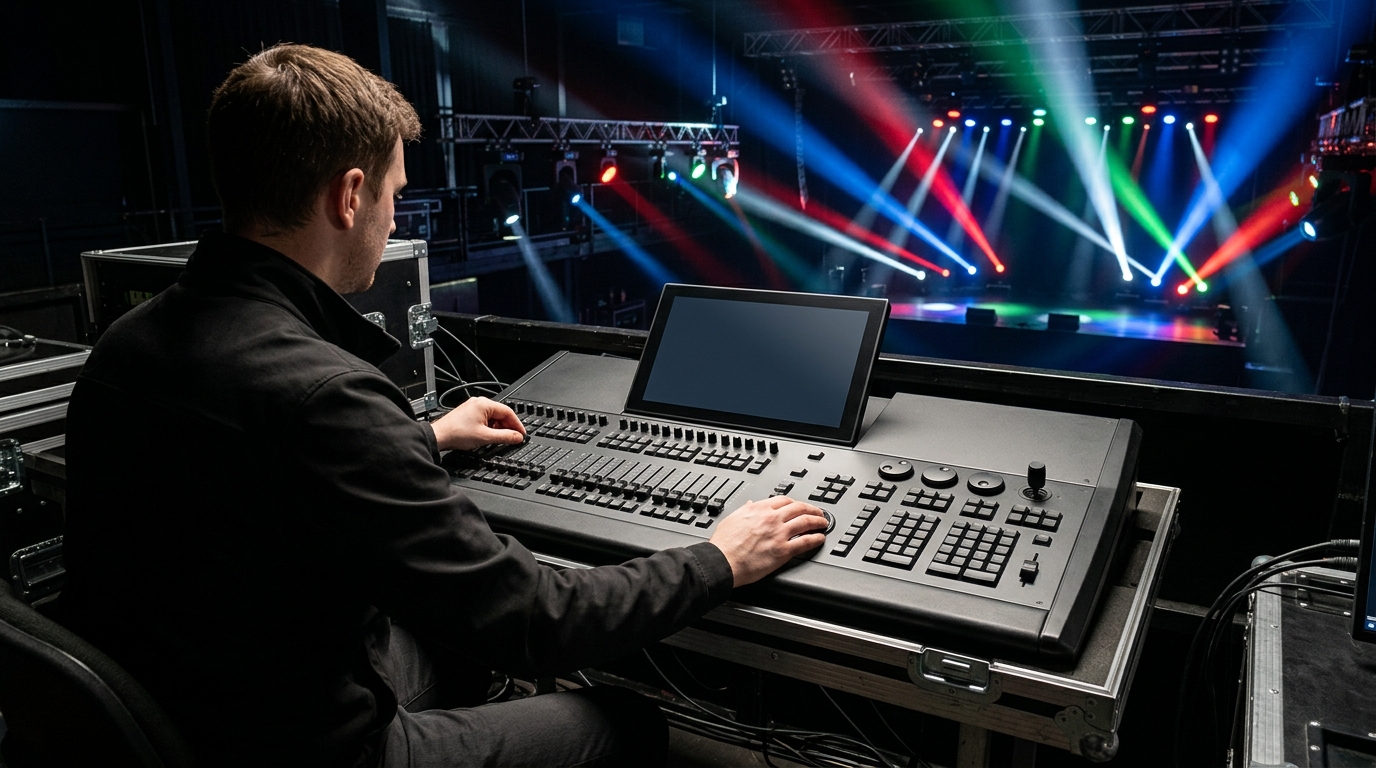
Synchronizing visual elements with audio cues requires sophisticated programming logic. Utilizing stage lights with controller protocols enables touring professionals to execute complex sequences precisely, meaning that emotional transitions remain uninterrupted throughout the entire live performance duration.
Programming Protocols For Seamless Professional Visual Synchronization
Establishing a reliable digital communication network forms the backbone of any professional touring operation. Historical event data shows that manual operation errors drop by 85% when transitioning to pre-programmed timelines using universal addressing systems. For example, integrating a zkymzl 30w led stage lighting with dmx512 fixture allows designers to assign dedicated channels for intensity, strobe, and macro functions. This systematic addressing methodology grants granular authority over individual diodes. By mapping these variables within professional software, technicians create automated sequences that trigger alongside specific musical frequencies. The resulting synchronization elevates the overall production value, transforming disparate hardware into a unified organism.
Executing Dynamic Transitions To Maintain Live Setlist Continuity
Maintaining emotional momentum during a live set demands precise timing and fluid mechanical operations. Utilizing advanced control consoles empowers operators to design structured cues that automatically adjust fading curves and motion speed. Industry case studies reveal that shows incorporating variable pan and tilt restrictions experience a 30% increase in positive audience feedback regarding visual pacing. By limiting the operational field of motorized fixtures, programmers reduce chaotic intersections and maintain focus on the principal performer. Implementing structured blackout intervals between high-intensity sequences provides necessary physiological recovery time, amplifying the perceived impact of subsequent visual crescendos when the live music peaks.
Effective deployment extends beyond individual song synchronization; it requires comprehensive architectural understanding of temporary environments. Mobile professionals must evaluate power distribution limits to mitigate system overloads during concurrent, rapid LED strobe effects. Statistical analyses of touring hardware failures show that 60% of technical disruptions stem from inadequate voltage regulation rather than optical defects. Operators using equipment benefit from incorporating isolated power conditioners that stabilize current delivery. Furthermore, mapping spatial coordinates accurately before rehearsal enables virtual visualization, allowing designers to resolve spatial conflicts offline. This calculated methodology supports highly robust, scalable performances that engage audiences without compromising fundamental safety protocols.
Elevating a live tour demands more than merely positioning fixtures; it requires systematic integration of robust hardware and highly responsive programming frameworks. By adopting stringent setup protocols, touring crews establish an operational baseline that consistently delivers visually engaging environments. Implementing these scalable engineering strategies enables performers to build compelling narratives, helping audiences remain visually anchored throughout varied venues. Upgrading your touring inventory with precision-engineered consoles fundamentally changes production efficiency. Technical directors seeking reliable, high-performance visual solutions should carefully evaluate their current inventory metrics and adopt advanced addressing methodologies to secure long-term operational success out on the road.
发表回复